Marine safety & efficiency:
Anchored in data. .
Turning assumptions into evidence.
We help designers and builders of complex marine infrastructure, asset owners and operators, and OEMs of mooring equipment, safety structures and hazard mitigation devices turn assumptions into evidence. Using customised full-scale testing plus calibrated computer simulations, we help you design safer systems, reduce risk, and deploy with confidence.
Evidence in action: A customer case study
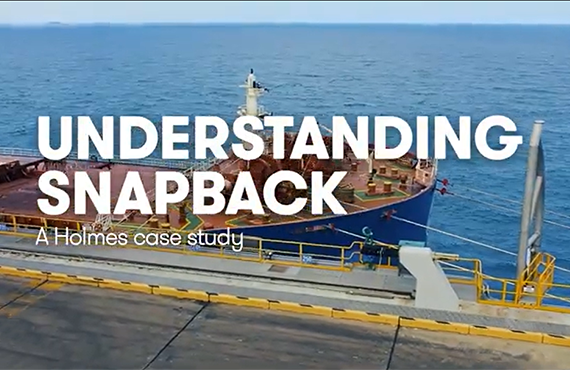
A CRITICAL RISK AND A $195M USD DECISION.
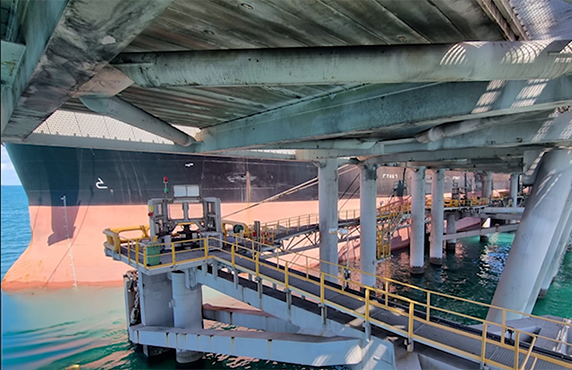
At Hay Point Coal Terminal, operated by BHP Mitsubishi Alliance (BMA), major maintenance had to be completed inside a known snapback hazard zone. The choice was stark.
Shut down the berth for weeks and lose 16,000 tonnes of production per day – worth US$195M – or find a way to keep maintenance workers safe so operations could continue.
The answer was a custom-designed snapback arresting structure. It needed to:
- protect a large area.
- be installed below berth in hard-to-access locations, without heavy lifting equipment or major additional infrastructure.
- adapt to varying berth geometry.
- be mobilised within a standard five-day shutdown.
- be demobilised within hours if cyclone conditions developed.
Working with BHP and Geobrugg, Holmes developed a solution backed by calibrated analysis and proven through world-first full-scale testing under worst-case conditions.
The result is a major step forward in snapback safety – a customisable arresting structure that can be rapidly deployed below the berth, repositioned as work progresses, and packed down within hours when no longer needed.
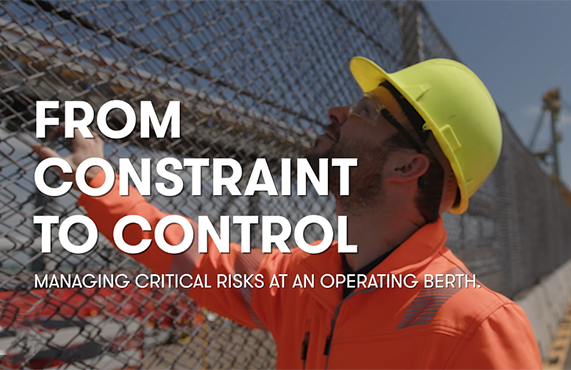
For BHP, this meant critical maintenance could proceed without weeks of berth downtime. More broadly, it shows how evidence-based design, collaboration, and full-scale testing can help develop practical risk controls for operational critical infrastructure within real operational constraints.
Decision ready capabilities
- Accelerate your R&D: Learn faster, avoid surprises, iterate quickly, fix issues early, and cut rework, powered by full‑scale testing and calibrated simulation.
- Decisions based on reality: Replicate your berth at full scale by mirroring on‑site geometry, loads and equipment (bollards, fairleads), with representative D/d ratios and realistic mooring line layouts.
- Data that matters, fast: Control the variables that matter to you, validate assumptions, reduce risk, and keep your programme on track.
- Pathway to approval for new tech and designs: Demonstrate performance with experimental testing and calibrated analysis, supported by clear reporting that informs risk assessments, safety management plans and review processes.
- Accredited evidence you can trust: Rely on ISO/IEC 17025 accredited processes, traceable data, and proven methods from analogous industries.
Research that moves the needle.
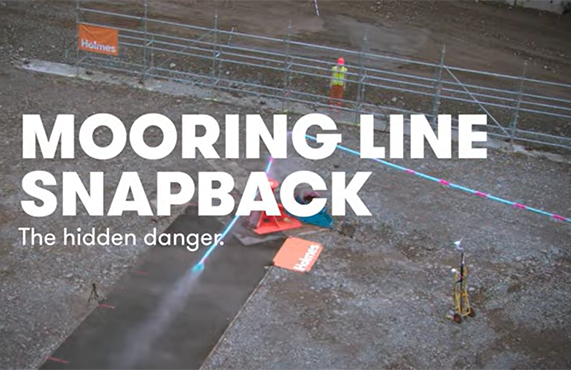
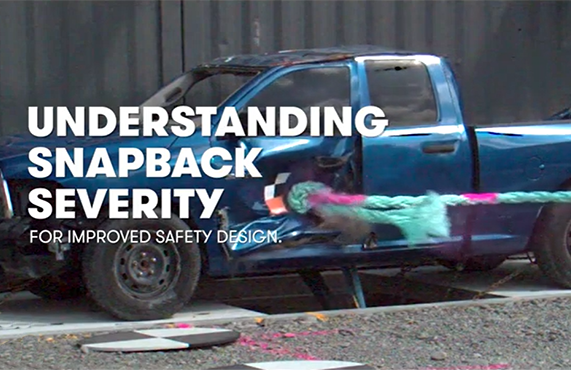
Our world‑first full‑scale snapback testing and calibrated modelling captured snapback behaviour in full detail, including line trajectories, true loads and energy transfer across complete, realistic mooring configurations. Ports and OEMs are now using these groundbreaking insights to improve parted‑line safety and operational efficiency by selecting and validating hazard controls, optimising arresting‑structure placement and streamlining foundation design. The same platform now supports broader marine R and D, delivering real data that is shaping standards and improving marine safety worldwide.
All Marine Case Studies
Ready to turn assumptions into evidence?
Share what you are building and your constraints, and we can tailor a development, testing and modelling plan that delivers decision-ready data for more efficient design, lower risk and safer operations.
Contact Ben:
E: [email protected]
P: +64 3 363 2180
We’d love to work with you.
To see all Case Studies, click here.